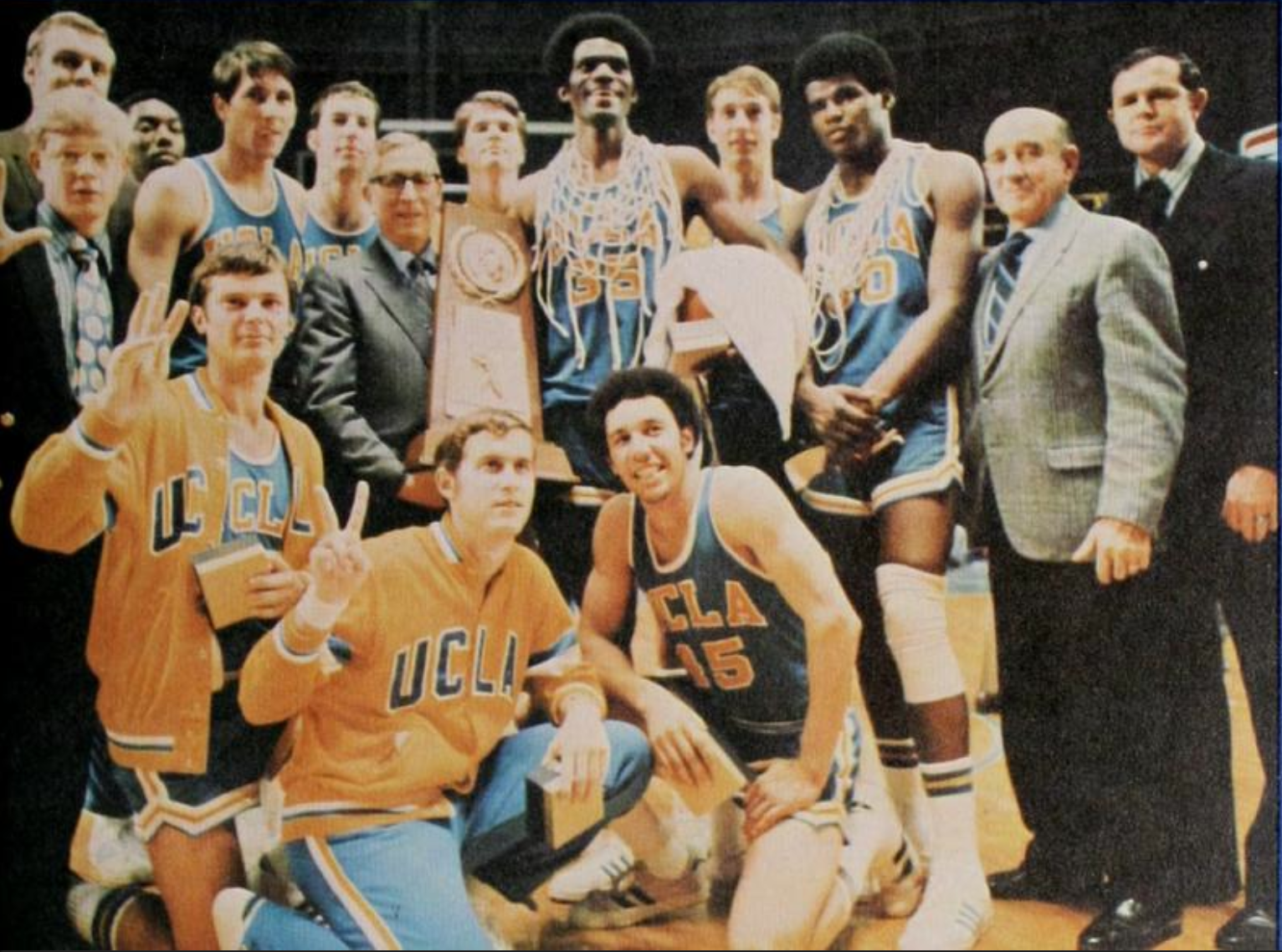
John Wooden didn't build a dynasty by chasing praise. He built it by enforcing standards when nobody was watching. Ten NCAA championships. Seven straight titles from 1967–1973. An 88-game winning streak. That level of dominance doesn't come from hype. It comes from a culture where honor is the operating system.
Wooden's most dangerous idea was simple: your reputation is what people think. Your character is what you are. He coached character like a skill. And he treated honor as non-negotiable — an internal law that governs every action, especially the small ones.
Be more concerned with your character than your reputation.
John WoodenHere's the translation for ambitious men: discipline fails when it's built on mood, motivation, or public approval. Discipline sticks when it's built on honor — rules you obey because you said you would. Not because it feels good. Not because it looks good. Because it's right.
The Pyramid of Success: Not Inspiration — A System
Wooden's Pyramid of Success is not a motivational poster. It is a hierarchy of behaviors. Fifteen building blocks that start with daily actions and end with Competitive Greatness — performing at your best when it matters most.
The base matters because it's repeatable. Industriousness. Enthusiasm. Friendship. Loyalty. Cooperation. These are not soft traits. They are operational behaviors that create consistency. Consistency creates trust. Trust creates execution. Execution wins.
UCLA didn't just win with talent. They won for years — including that seven-title streak and the 88-game run — because the culture didn't change when players graduated. Standards stayed. Behavior stayed. Honor stayed.
Greatness
Honor is the constraint that makes the Pyramid work
Most men build discipline like a temporary sprint: “I'll grind until I get the result.” Wooden built discipline like a permanent code: “I will do the right thing, the right way, every day.” Honor is what stops you from cutting corners when pressure hits.
In your life-system, honor must function like a hard constraint — like gravity. It doesn't care about excuses. It doesn't negotiate. If your rules bend, your discipline collapses.
The three blocks to weaponize first
- Industriousness: Work output you can measure. Hours mean nothing if results are soft. Track reps and deliverables.
- Condition: Your body is your enforcement tool. Sleep, training, and nutrition determine your decision quality under stress.
- Poise: Emotional control when stakes rise. If you can't stay calm, you can't lead yourself.
These three aren't the whole Pyramid. They're the first lever. They turn honor into behavior and behavior into results.
Go Deeper: Read XIII Pillars
John Wooden embodies the first pillar of the doctrine — Honor. The complete framework for building a life of discipline, sovereignty, and legacy awaits.
Explore the Book
Discipline Is Not Willpower: The Data Says So
Willpower is a weak plan. It collapses under fatigue, stress, and ego. Wooden didn't bet championships on “try harder.” He engineered habits through repetition, fundamentals, and standards.
Modern research backs him up. A major longitudinal study linked early self-control to better health and financial outcomes decades later, plus lower rates of criminal behavior. Translation: disciplined character pays compound interest across a lifetime.
That study matters because it kills the myth. Discipline isn't a personality trait you either have or don't. It's a trainable set of behaviors with measurable ROI.
Wooden's hidden weapon: fundamentals under fatigue
Wooden was famous for drilling basics. He didn't get bored with the fundamentals. He got obsessed. Even his early practices emphasized detail and repetition. The lesson is clear: you don't rise to your goals. You fall to your training level.
Your honor code must be built on fundamentals you can execute when tired: sleep protocol, training schedule, work blocks, and decision rules. If it only works when you feel motivated, it isn't discipline. It's entertainment.
Honor as Operational Constraint: Your Non-Negotiable Code
Honor is not “being a good guy.” Honor is a rule set that governs choices. It sets boundaries for what you will do, what you will not do, and what you will do when you fail. Yes — when. Because you will fail. The difference is whether you have a protocol or an excuse.
Wooden's culture held because it was consistent. Consistency is enforcement. Enforcement is honor in action.
Write your Honor Code: five rules, no loopholes
Keep it tight. Five rules you can remember under pressure. Each rule must be binary: pass or fail. No vague language.
- Rule 1 — Truth: No lying, no “white lies,” no misleading by omission.
- Rule 2 — Commitment: If you give your word, you do it. Or you renegotiate before the deadline — never after.
- Rule 3 — Body: Sleep minimum and training minimum are mandatory. Your body is not optional equipment.
- Rule 4 — Work: Daily deep work block before entertainment. Output first, dopamine later.
- Rule 5 — Respect: No cheap talk. No gossip. No public virtue, private vice.

The 30-Day Honor Audit
Most men track money and weight, but not integrity. That's backward. Integrity is the upstream variable. If it breaks, everything downstream breaks with it — work, fitness, marriage, leadership.
Your Honor Audit is a 30-day logging operation. Every day you record three integrity checkpoints. You target a measurable adherence rate of >90%. Not “pretty good.” Not “most days.” Pass or fail.
Daily log: three integrity checkpoints
- Checkpoint A — Word kept: Did I do what I said I would do today?
- Checkpoint B — Hard thing first: Did I complete my first deep work block before any entertainment?
- Checkpoint C — Body standard: Did I hit sleep minimum and training minimum?
Three binary marks per day. At the end of 30 days, you'll have 90 data points. Your discipline will stop being a feeling and become a report.
If your rules have no consequences, they aren't rules. They're wishes.
The 12-Week Pyramid Drill
Wooden's Pyramid works because it's layered. You build the base, then you stack. Your version runs for 12 weeks. Each week, you focus on three blocks and attach objective KPIs. You don't “feel” improvement. You measure it.
Weekly structure
- Sunday (30 min): Choose 3 Pyramid blocks, define KPIs, pre-commit consequences.
- Mon–Thu: Execute, log, correct fast.
- Friday (20 min): Score adherence, write one lesson, set next week's correction.
- Saturday: Active recovery + environment reset.
The Failure Protocol
Your system is not real until it handles failure. Most men fail and then spiral — shame, avoidance, binge behavior, reset Monday. That cycle is weakness dressed as “self-awareness.” End it.
Strike 1: Immediate correction
You miss a standard. You do not self-attack. You correct. Same day, if possible.
- Missed workout? Do a 20-minute conditioning session before dinner.
- Missed deep work? Do a 30-minute block before sleep, phone outside the room.
- Broke a word? Admit it, reset the deadline, and deliver.
Strike 2: Containment and restitution
Second failure in the same category within seven days triggers containment: remove the trigger for 72 hours. Restitution: a predefined penalty. This is not punishment. This is enforcement. Wooden's teams didn't win because they were perfect. They won because their standards were enforced and corrections were immediate.
Begin the Doctrine
Discipline Is Doctrine is more than a philosophy. It is a movement. Subscribe and receive doctrine transmissions direct.
Subscribe to the Newsletter
Command Decision
Wooden's legacy isn't just championships. It's proof that honor scales. It scales into leadership. It scales into performance under pressure. It scales into a life where you trust yourself.
You don't need a crowd to validate you. You need a code you won't break. Your reputation can't hold you together. Your honor can.
Stop collecting tips. Enlist in a system. Put your standards in writing, measure them daily, and enforce them without negotiation. That is the Wooden way. That is the doctrine.